
%20(1).webp)
How to Move a Grandfather Clock Without Stopping It for Good
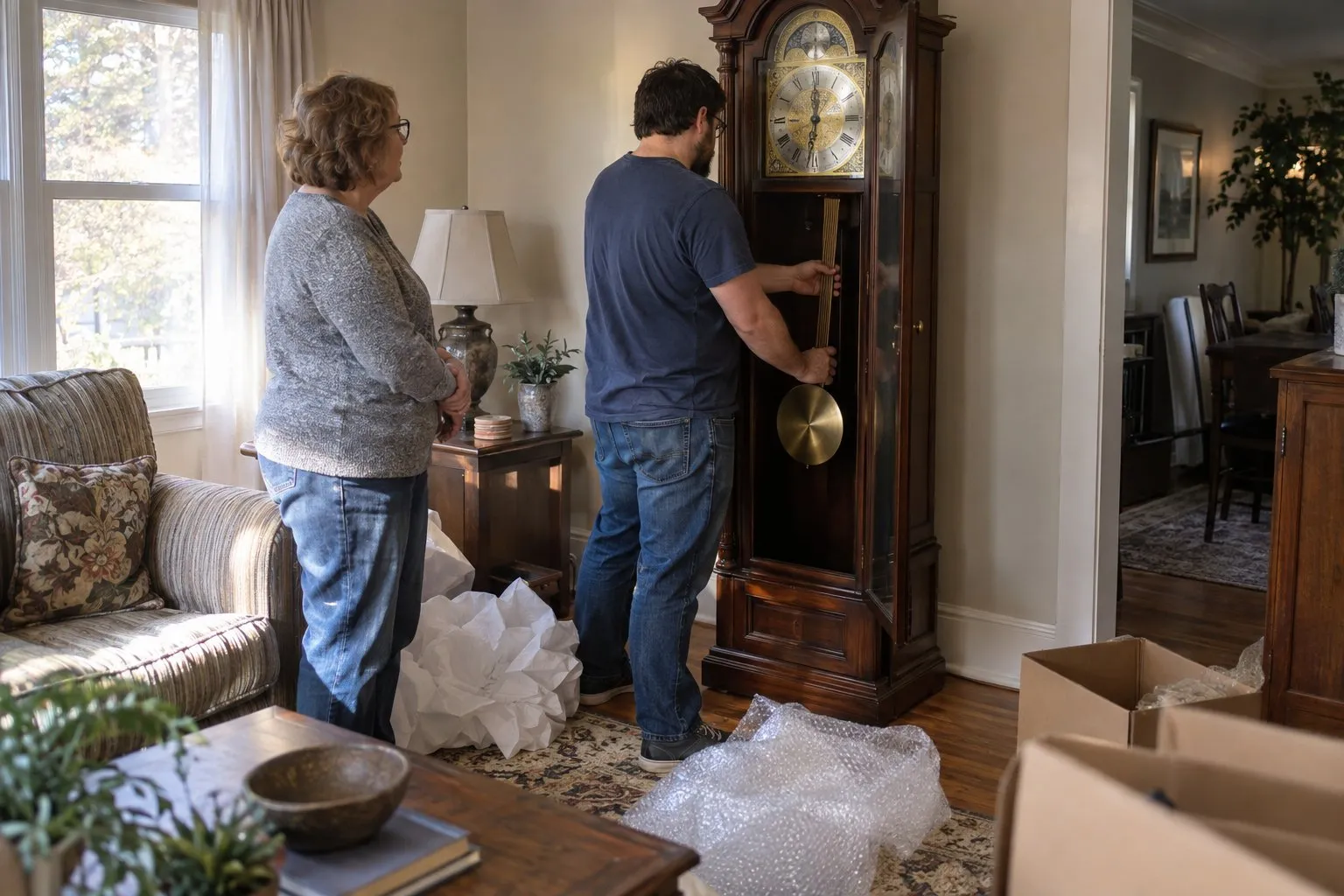
Moving a grandfather clock safely means removing the weights and pendulum before anything else moves, locking or padding the moving parts inside the case, and keeping the whole clock upright throughout transport. Skip any one of those steps and you risk a cracked case, a bent chime rod, or a movement that never keeps accurate time again. These clocks are tall, top-heavy, and full of loose internal parts that were never designed to survive a truck ride.
If you have inherited a grandfather clock or are relocating one that has been in the family for decades, the good news is that the process is straightforward once you know the order of operations. Here is how to do it without stopping the clock for good.
Why Are Grandfather Clocks So Risky to Move?
Grandfather clocks are risky to move because their weight, pendulum, and chime rods hang loose inside a tall, narrow case with a low center of gravity problem: most of the mass sits near the bottom while the case towers several feet above it. A sudden tilt or jolt lets internal parts swing and strike the case walls, glass, or each other.
Unlike a dresser or bookshelf, a grandfather clock is really a cabinet housing a working mechanical instrument. The movement (the gears and springs that keep time) can shift out of alignment if the case is jarred, and the glass panels on the front and sides are often original and irreplaceable on older pieces. Treat it less like furniture and more like a piece of equipment with furniture wrapped around it.
How Do You Prepare a Grandfather Clock Before Moving Day?
Preparing a grandfather clock means stopping the pendulum, removing the weights and pendulum entirely, and securing or removing the hands before the case ever gets tilted. Doing this the night before, not the morning of, gives you time to work without rushing.
Stop and Remove the Pendulum
Stop the pendulum swing by hand, then unhook it from the movement's crutch and lift it straight out through the access door. Wrap it separately in soft cloth or bubble wrap and label it clearly. Pendulums are often longer and more delicate than they look, and a bent pendulum rod can throw off the clock's timekeeping even after everything else is reassembled.
Remove and Label the Weights
Most grandfather clocks have two or three weights that power the time and chime functions, and they are not interchangeable. Photograph their left-to-right order before removing them, then label each one (left, center, right, or time/chime/strike depending on your model) so reassembly at the new home is not a guessing game. Wrap each weight individually since they are dense and will scratch the case or each other if left loose.
Secure or Remove the Hands and Chime Rods
If the minute and hour hands are removable, take them off and pack them with the pendulum. If they are not designed to come off easily, wrap the clock face area with soft padding so the hands cannot catch on wrapping material or bend during transit. Chime rods (the thin metal rods that produce the clock's tone) are especially prone to bending, so avoid pressing anything against the movement area once the case is closed.
What Is the Right Way to Pack and Wrap the Case?
Pack the case by padding the corners and feet first, then wrapping the full body in moving blankets secured with stretch wrap, never tape directly on wood or glass. Glass panels need their own layer of protection separate from the wood finish.
Start by taping an "X" of painter's tape (not packing tape, which pulls finish) across any glass panel from the inside if possible, or cover it with cardboard cut to size on the outside. Wrap moving blankets around the entire case, paying extra attention to the top cornice and the base, which are the two points most likely to take an impact. Secure the blankets with stretch wrap or moving straps rather than tape, since tape can pull varnish off antique finishes when removed.
Do not stand anything on top of the clock case and do not stack other boxes against it in the truck. It needs its own protected space, ideally against a wall where it can be strapped upright.
How Should a Grandfather Clock Ride in the Moving Truck?
A grandfather clock should ride upright and strapped to the truck wall, never laid on its back or side. Laying it down puts uneven pressure on the case joints and can allow any parts you missed removing to shift and cause internal damage.
Load it last among heavy furniture so it is not buried under boxes, and position it so the case is flush against a flat surface with straps running across the midsection and base. If the drive is long distance, check the straps at any stop to make sure the truck's motion has not loosened them.
How Do You Reassemble the Clock at the New Home?
Reassemble by leveling the case first, then reinstalling the weights in their labeled positions, hanging the pendulum, and letting the clock sit still for a few minutes before starting the pendulum swing. Rushing this step is the most common reason a newly moved clock will not keep time.
Use a level against the case sides, not just the floor, since old floors and the case itself may both be slightly uneven. Once it is level, hang the weights in the correct order using your earlier photo, reattach the pendulum, and give the clock a gentle push to start the swing. It may need minor adjustment over the following day or two as it settles into its new spot.
Should You Hire Movers for a Grandfather Clock?
Hiring movers makes sense when the clock is heavy, has a tall or narrow staircase to navigate, or is simply too valuable to risk on a DIY move. A single person should never attempt to carry or tilt a grandfather clock alone.
Two people can usually handle the disassembly and wrapping, but moving the case itself, especially through doorways, stairwells, or tight turns, is where professional help earns its keep. A crew experienced with oversized and specialty items will know how to angle the case through tight spaces without stressing the joints, and they carry the padding and strapping equipment to do it right the first time. If your move also involves other bulky or delicate furniture, our packing services team can wrap and prep everything in the same visit.
Whether you handle the disassembly yourself or want the whole job done for you, plan the clock as its own line item in your moving day timeline rather than an afterthought squeezed in with the boxes. If you are coordinating a larger household move around it, request a free moving quote from Moving Masters and mention the clock so our crew arrives prepared with the right materials.
Frequently Asked Questions
Do you need to remove the weights before moving a grandfather clock?
Yes. The weights and pendulum must be removed before the case is tilted or carried. Leaving them in place allows them to swing and strike the inside of the case, which can crack panels, bend chime rods, or throw the movement out of alignment.
Can a grandfather clock be laid on its back for transport?
No, it should stay upright. Laying the case down puts uneven stress on the joints and glass panels, and any small part you missed removing can shift and cause damage that is not visible until the clock is set back up.
How long can a grandfather clock go without running during a move?
There is no strict time limit. A stopped clock is not harmed by sitting idle, but once it is reassembled it should be leveled and given a day or two to settle before you expect it to keep accurate time.
Will moving a grandfather clock throw off its timekeeping?
It can temporarily, even after a careful move, because slight changes in floor level or humidity affect the pendulum swing. Minor adjustments to the pendulum length or leveling of the case usually correct this within a few days.
Is it safe to move an antique grandfather clock myself?
It can be, if you have a second person to help and a clear path free of stairs and tight turns. For heavier cases, narrow staircases, or especially old or valuable clocks, hiring movers experienced with oversized antique items reduces the risk of damage.


Frequently Asked Questions
Yes. The weights and pendulum must be removed before the case is tilted or carried. Leaving them in place allows them to swing and strike the inside of the case, which can crack panels, bend chime rods, or throw the movement out of alignment.
No, it should stay upright. Laying the case down puts uneven stress on the joints and glass panels, and any small part you missed removing can shift and cause damage that is not visible until the clock is set back up.
There is no strict time limit. A stopped clock is not harmed by sitting idle, but once it is reassembled it should be leveled and given a day or two to settle before you expect it to keep accurate time.
It can temporarily, even after a careful move, because slight changes in floor level or humidity affect the pendulum swing. Minor adjustments to the pendulum length or leveling of the case usually correct this within a few days.
It can be, if you have a second person to help and a clear path free of stairs and tight turns. For heavier cases, narrow staircases, or especially old or valuable clocks, hiring movers experienced with oversized antique items reduces the risk of damage.