
%20(1).webp)
Do Couches Come Apart? How to Tell Before Moving Day
Most couches do not come apart the way you might hope, but some do, and knowing which kind you own before moving day decides whether you carry it through the front door in one piece or spend twenty minutes wedging it into a hallway. Sectionals are built to separate at their connector points. Traditional sofas almost never are, though many have legs, arms, or a back that detach with a few tools. This guide walks through how to check what you have, what genuinely comes apart versus what just looks like it should, and how to get a stubborn couch through a doorway that is smaller than the furniture.
Do Couches Come Apart, or Is That a Myth?
Some do and some do not, and the difference usually comes down to how the couch was built, not its size or price. Sectionals, modular sofas, and many sleeper sofas are designed to separate into individual pieces because manufacturers assume they will need to pass through doors in sections. A single-frame sofa, loveseat, or traditional three-cushion couch is usually one continuous unit held together with staples, glue, and internal webbing, and it was never meant to split.
The fastest way to find out which one you have is to flip the couch over and look at the underside. Visible bolts, hex fittings, or a seam where two frame sections meet are signs of take-apart construction. A smooth, upholstered underside with no hardware usually means the frame is fixed.
How to Break Up a Sofa That Was Not Built to Separate
If your sofa has no connector hardware, "breaking it up" means removing what you can rather than splitting the frame itself. Legs almost always unscrew or unbolt, and many arms attach with hidden bolts accessible from underneath or behind a zippered cushion panel. Removing these pieces can shave several inches off every dimension, which is often the difference between a couch that clears a doorway and one that does not.
What you should not attempt is cutting into webbing, foam, or the wood frame itself to force a non-separable sofa into pieces. This damages the structure permanently and usually voids any manufacturer warranty. If legs and arms come off and the couch still will not fit, the next step is adjusting the angle of entry rather than the couch itself.
Tools worth having on hand
- A ratchet set or adjustable wrench for leg bolts and hex fittings
- A screwdriver set for panel screws hidden under fabric flaps
- Furniture sliders to pivot the frame without scuffing floors
- A moving blanket to protect exposed wood or metal connector brackets
How to Move a Sectional Couch Piece by Piece
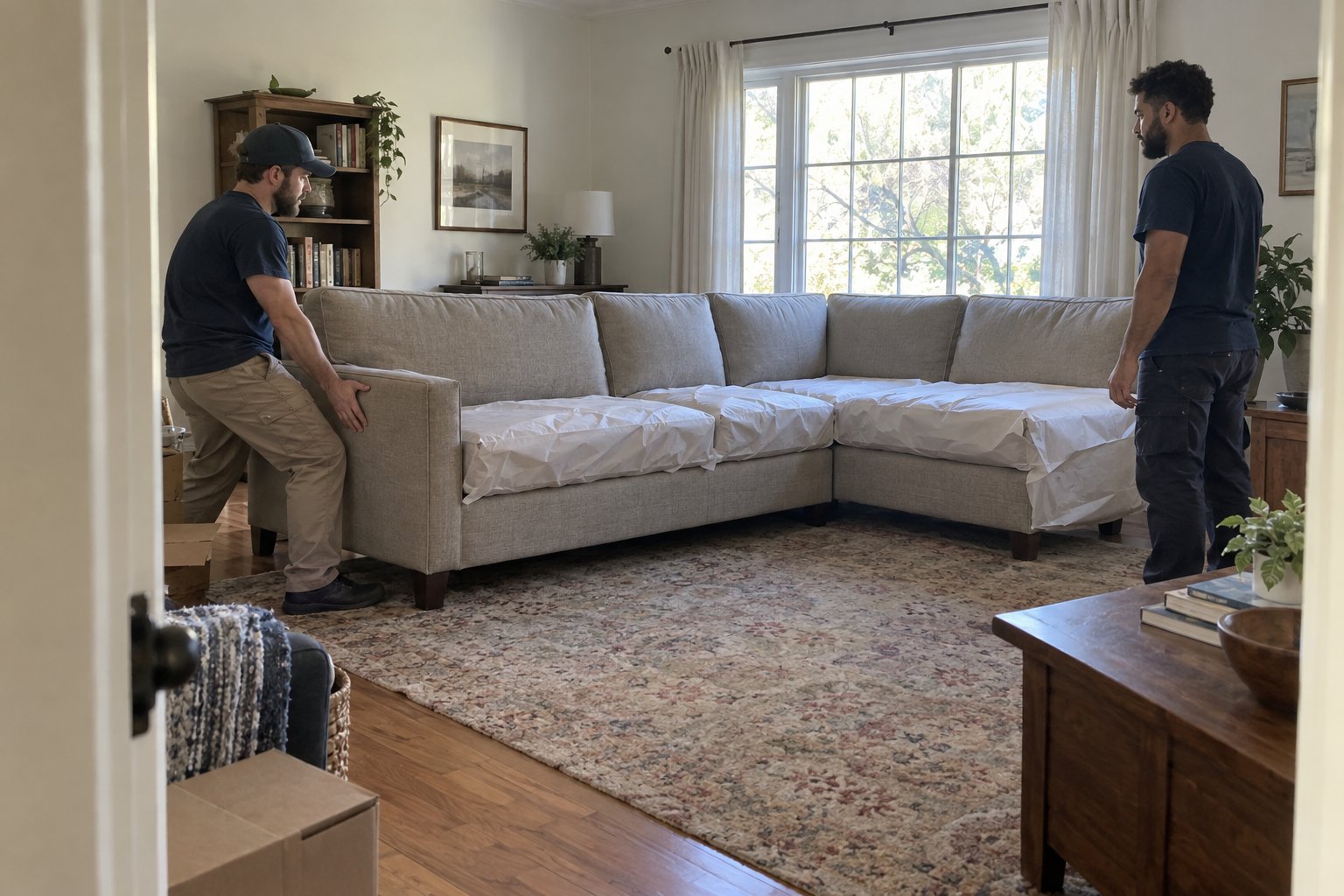
Sectionals are the easiest upholstered furniture to move precisely because they are designed to separate. Each section connects to the next with a bracket, cam lock, hook-and-loop strip, or a simple pin, usually hidden along the back or underside where two pieces meet. Locating and releasing these connectors turns one oversized piece of furniture into several manageable ones.
Work from one end of the sectional to the other rather than trying to find every connector at once. Lay each section flat or on its side once separated, and label or photograph the connector layout so reassembly at the new home does not turn into guesswork. Corner or wedge pieces are usually the heaviest single sections, so plan for two people on those even after the sectional is broken down.
How to Move a Couch Through a Narrow Door Without Taking It Apart
When a couch cannot be disassembled and still will not clear a doorway, the fix is almost always the angle, not the couch. Standing the sofa on one end and tilting it diagonally through the frame uses the diagonal measurement of the doorway, which is larger than either the width or height alone. This single adjustment solves most "it won't fit" situations.
Removing the door from its hinges first can add another inch or two of clearance, which matters more than it sounds like it would on a tight fit. If a hallway turn is the real obstacle rather than the doorway itself, consider whether a window or sliding door offers a straighter path, since movers sometimes use this route for oversized pieces rather than fighting a tight interior corner.
A simple order of operations
- Measure the doorway width, height, and diagonal
- Measure the couch at its widest and deepest points
- Remove the door from its hinges if clearance is close
- Tilt the couch onto one arm and angle it through on the diagonal
- Clear the path of rugs, furniture, and door stops before lifting
When to Call in Help Instead of Forcing It
If a couch will not pass through any doorway or window after you have tried removing parts and adjusting the angle, it is a sign the piece needs professional handling rather than more effort. Movers carry equipment like furniture straps and sliding boards that distribute weight differently than a two-person carry, and they have seen enough tight hallways to know which approach actually works for a given floor plan.
This is also the point where a DIY move can quietly turn expensive: a cracked door frame or a torn stair rail costs more to fix than the help would have cost. If you are weighing whether to handle the whole move yourself or bring in local movers for the heavy pieces, a stuck couch is often the deciding factor.
Protecting the Couch (and the Walls) on the Way Out
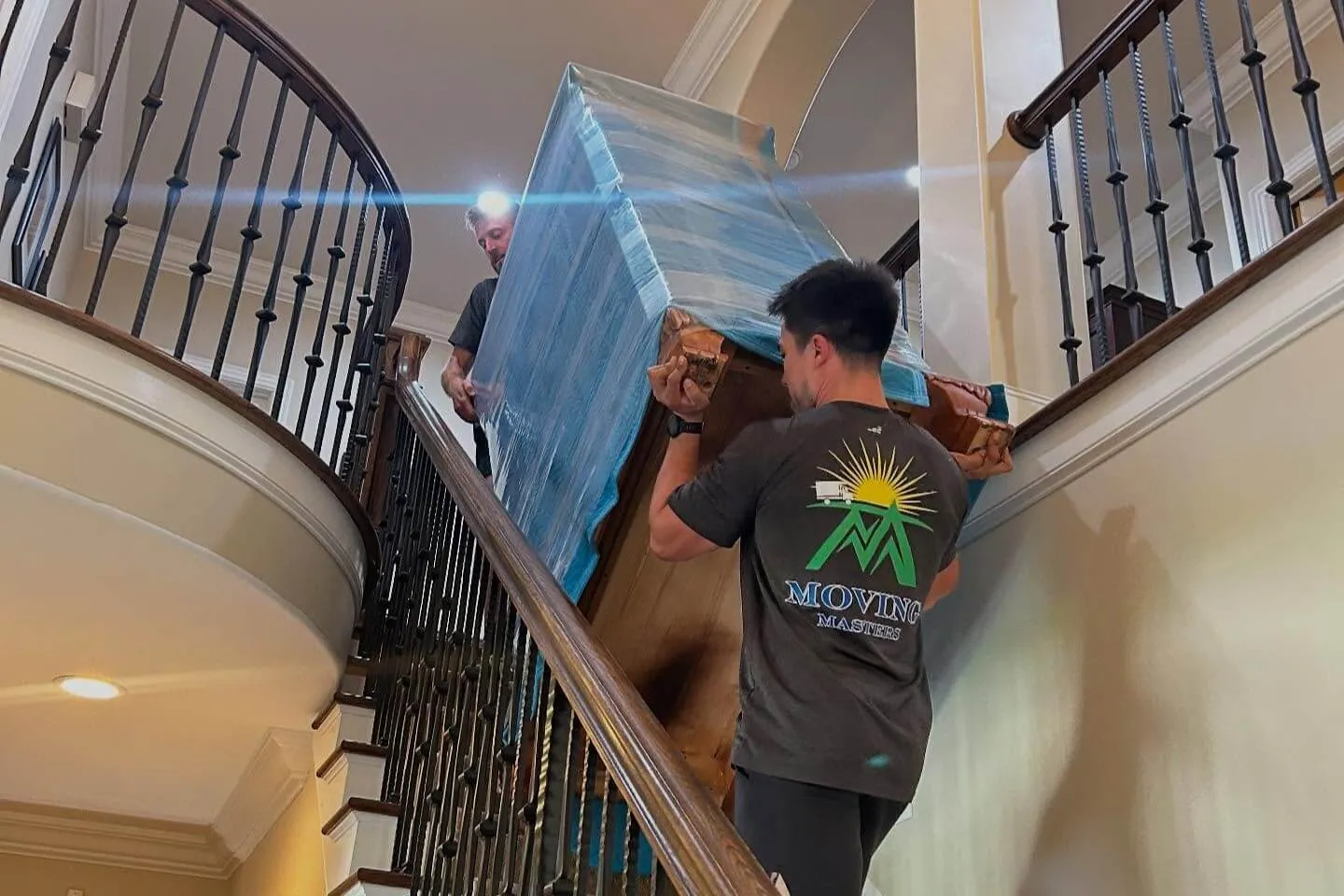
Whether a couch separates into pieces or travels as one unit, wrapping it before it leaves the house prevents the scuffed corners and torn upholstery that show up after the fact. Moving blankets secured with stretch wrap protect fabric and exposed wood alike, and sliders under the legs keep floors from scratching during the awkward shuffle toward the door.
If you are already stocking up on blankets, wrap, and tape for the rest of the house, it is worth picking up moving boxes and supplies at the same time rather than making a second trip once the couch is already stuck in the hallway. And if this couch is just one piece of a larger move, a furniture protection guide covers how to handle the rest of the house the same way.
When you are ready to get the whole move scheduled, you can get a moving quote from Moving Masters and let a crew that has solved this exact doorway problem before handle the heavy lifting.
Frequently Asked Questions
Do all sectional couches come apart the same way?
No. Some use cam-lock connectors, others use brackets, hook-and-loop strips, or simple pins, and the connector location varies by manufacturer. Check along the back seam and underside where two sections meet before assuming a method.
Can you remove the back cushions to make a couch smaller for moving?
Removing back and seat cushions reduces weight and makes the couch easier to carry, but it does not change the frame's width, height, or depth, which are the measurements that matter for doorways.
Is it normal for a couch to lose screws or wobble after being taken apart and reassembled?
A little wobble after reassembly is common if a bolt was not fully retightened. Walk back through each connection point with a wrench before using the couch, since a loose leg bolt is an easy fix early but a bigger repair once it strips.
How do you know if a couch is too heavy to carry without taking it apart?
If two people cannot lift one end a few inches off the ground without straining, the couch needs either more hands, furniture straps, or partial disassembly before it moves anywhere, especially on stairs.
What is the difference between a sofa that reclines and one that is modular?
A reclining sofa has moving parts inside a single fixed frame and is not designed to separate. A modular or sectional sofa is built from independent sections that connect and disconnect by design, which is what makes it movable in parts.

Frequently Asked Questions
No. Some use cam-lock connectors, others use brackets, hook-and-loop strips, or simple pins, and the connector location varies by manufacturer. Check along the back seam and underside where two sections meet before assuming a method.
Removing back and seat cushions reduces weight and makes the couch easier to carry, but it does not change the frame's width, height, or depth, which are the measurements that matter for doorways.
A little wobble after reassembly is common if a bolt was not fully retightened. Walk back through each connection point with a wrench before using the couch, since a loose leg bolt is an easy fix early but a bigger repair once it strips.
If two people cannot lift one end a few inches off the ground without straining, the couch needs either more hands, furniture straps, or partial disassembly before it moves anywhere, especially on stairs.
A reclining sofa has moving parts inside a single fixed frame and is not designed to separate. A modular or sectional sofa is built from independent sections that connect and disconnect by design, which is what makes it movable in parts.