
%20(1).webp)
How to Move a Fridge Full of Food Without Losing It All
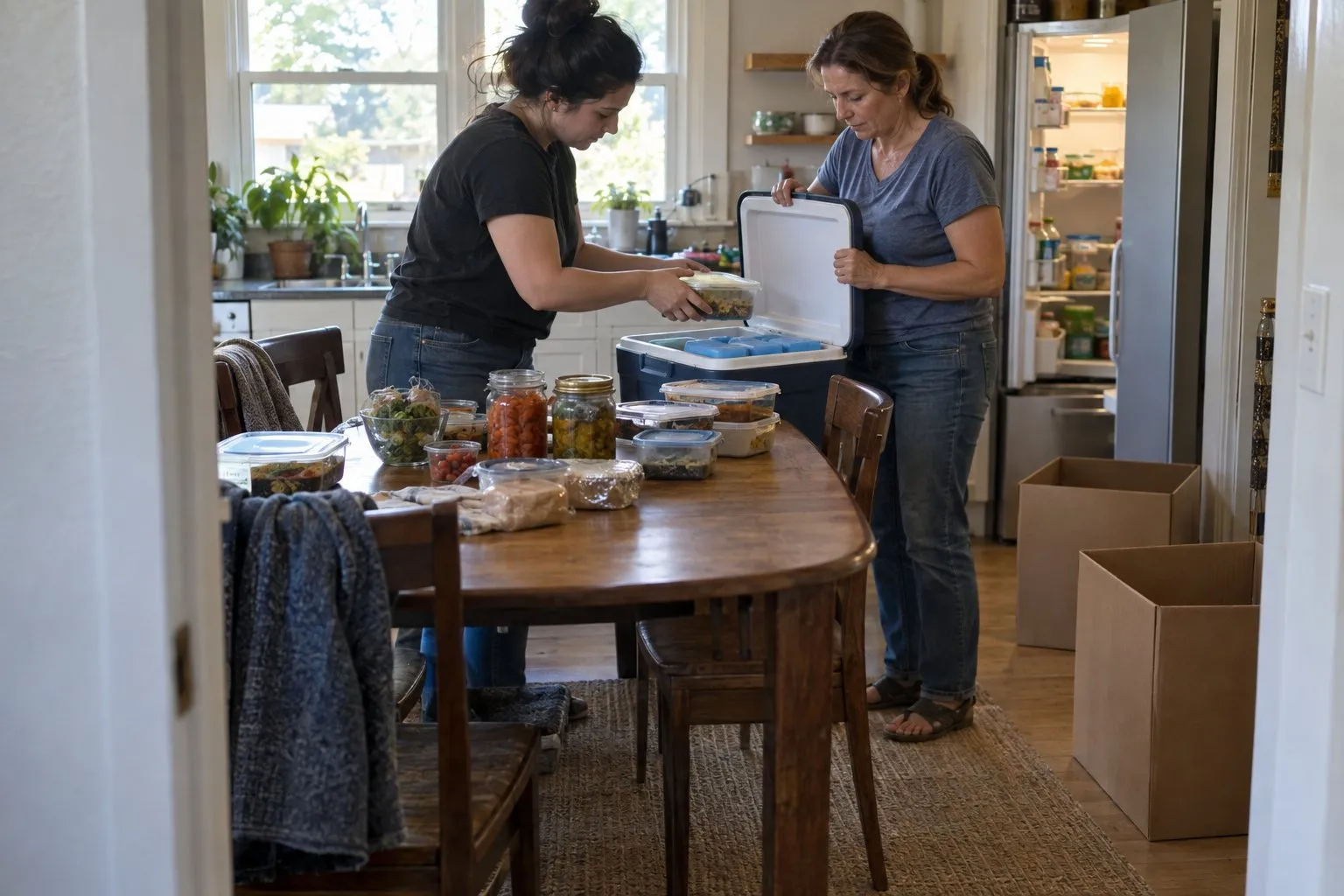
If your refrigerator is still stocked on moving day, the food inside needs its own plan, separate from the appliance itself. Moving a fridge full of food comes down to three things: deciding what actually survives the trip, keeping cold items cold the whole way, and timing the empty-out so the fridge is ready for movers without wasting groceries you just bought. Get any one of those wrong and you either throw away a full freezer or end up with a leaking cooler in the back seat.
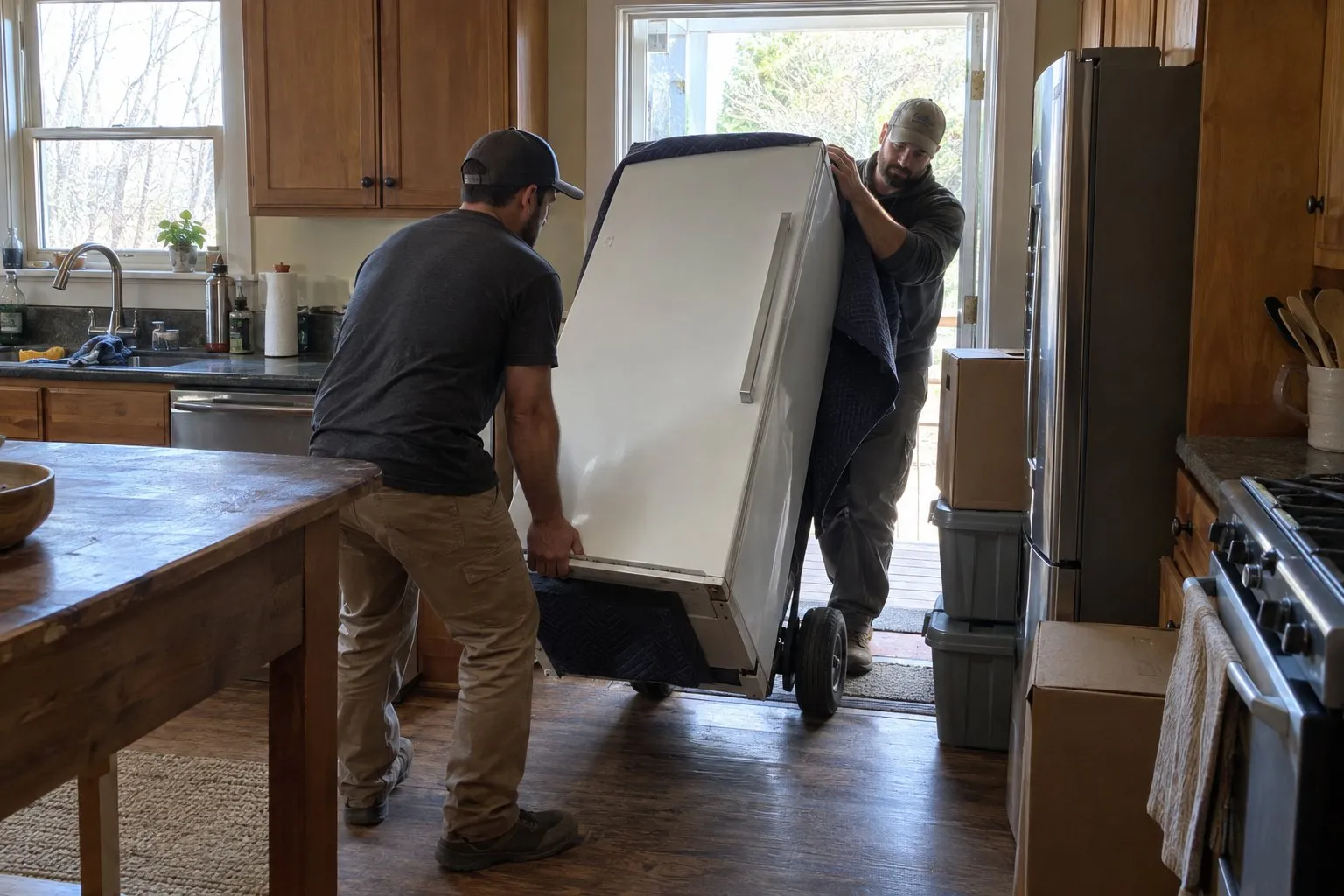
This guide is about the food, not the appliance hookup. If you also need to know how to disconnect, defrost, and transport the refrigerator unit itself, that process runs on its own timeline and is worth reading separately, and our refrigerator moving guide covers it step by step.
How Far in Advance Should You Start Eating Down Your Fridge Before Moving?
Start eating down your fridge and freezer about two weeks before moving day, and stop buying perishables you cannot finish in that window. The goal is to arrive at moving day with a mostly empty fridge and a freezer that has only what you plan to actively transport, not a stockpile you are scrambling to use up the night before.
Work backward from your load date. In week two, plan meals around what is already in the freezer instead of adding to it. In the final week, shift to fresh produce, dairy, and anything with a short shelf life so it gets used rather than dumped. By the last two or three days, your fridge should hold only condiments, a few staples, and whatever you have decided is worth transporting cold. This is also a good week to work through the rest of your week-by-week moving checklist so the kitchen is not the only thing left until the last minute.
What Food Should You Toss, Donate, or Take With You?
Sort food into three piles as soon as you start packing: things to eat now, things to donate, and things worth transporting. Anything that needs refrigeration and won't be eaten or moved within a day should not make the cut, since the risk of spoilage outweighs the cost of replacing it.
Toss
Opened jars past their best-by date, anything already borderline, and partial containers of leftovers rarely justify the space or the risk. Half-used produce that has started to turn is not worth packing.
Donate
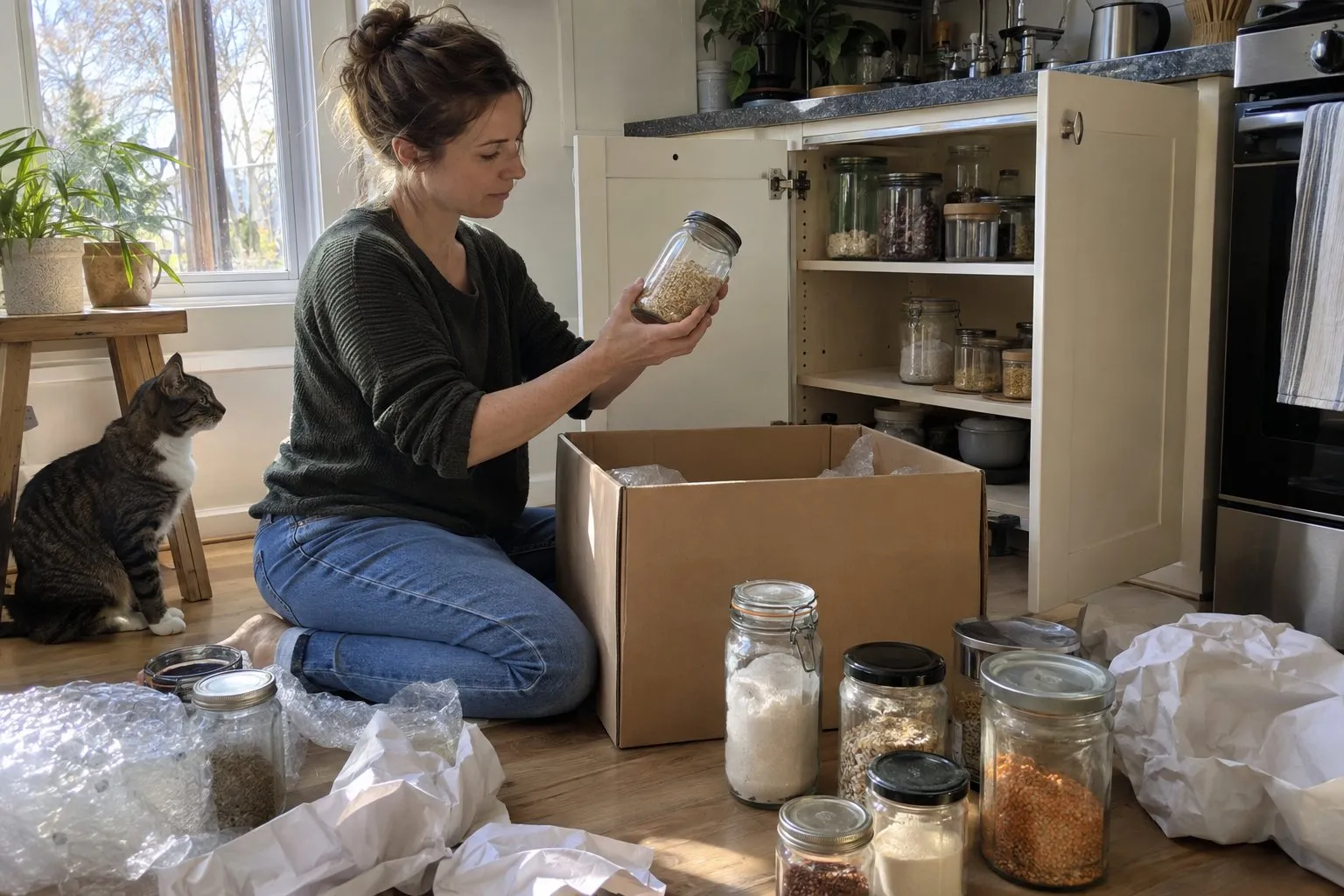
Unopened, shelf-stable pantry items and unopened canned goods are good candidates for a local food pantry if you are downsizing your kitchen inventory anyway. This is also a natural moment to clear out duplicate small appliances or kitchen gear you no longer need, which pairs well with a broader downsizing move before the movers arrive.
Take with you
Frozen meat, high-value frozen goods, and anything you would be annoyed to repurchase are worth the effort of a cooler. Condiments and staples that survive room temperature for a few hours can usually just ride in a labeled kitchen box alongside your other boxes and supplies.
How Do You Keep Frozen and Refrigerated Food Cold During the Move?
Frozen food stays safe longest when it is packed tightly in a well-insulated cooler with dry ice or frozen gel packs, since a full, tightly packed cooler holds cold far longer than one with gaps. Refrigerated items need a separate cooler with regular ice, because mixing frozen and chilled goods in the same container means one or the other ends up at the wrong temperature.
A few practical points on execution:
- Freeze water bottles or gel packs a day ahead so you are not relying on ice you have to buy last minute.
- Pack the cooler so there is minimal air space. Use towels or newspaper to fill gaps, which also cuts down on shifting during transport.
- Keep the cooler in the passenger vehicle, not the moving truck, since trucks are not climate controlled and can sit for hours between loading and unloading.
- For long-distance moves, plan on replenishing ice roughly every 24 hours and know where you can stop to do it.
- Label the cooler clearly so it does not get buried under boxes or left behind in a rush.
Is It Safe to Move Food Across State Lines or Long Distances?
Moving fresh or frozen food long distance is generally safe for a day or two with proper cooling, but it becomes risky and often not worth it beyond that. For a local, same-day move, almost anything refrigerated or frozen can travel with basic ice and a cooler. For a multi-day interstate move, the math changes: dry ice, repeated ice runs, and the chance of spoilage make it more sensible to eat down your freezer completely and restock once you arrive.
If you are working with long-distance moving services, ask your moving coordinator how the truck is loaded and roughly how long transit will take, since that affects how much food is realistically worth carrying versus replacing at your destination.
What Should You Do With the Fridge Itself Once It's Empty?
Once the food is out, the refrigerator needs to be unplugged, defrosted, dried, and secured well before the truck arrives, and that process runs on a different timeline than the food does. Most of the mistakes people make with a stocked fridge happen because they treat the appliance and its contents as one task instead of two separate ones with different deadlines.
If you are unsure how much lead time the defrost cycle needs or how to secure the drum and doors for transport, or if a washer and dryer are leaving the house on the same day, our appliance disconnect order guide walks through the sequencing so the food task and the appliance task do not collide on the same afternoon.
Building Your Food-Moving Plan Into Moving Week
The simplest way to avoid a last-minute cooler scramble is to treat food planning as its own line item on your moving checklist, not an afterthought handled the morning of. Decide your eat-down window, pick your cooler strategy, and know which foods you are donating or discarding at least a week out.
If your move involves more than just the kitchen, whether that is packing fragile items, coordinating a long-distance carrier, or figuring out where the rest of your boxes are going, a free moving quote from Moving Masters is a good next step to get the logistics locked down while you handle the food separately.
Frequently Asked Questions
Can you move frozen food without it thawing?
Yes, for a day or two, if it is packed tightly in an insulated cooler with dry ice or frozen gel packs. A full cooler holds temperature much better than one with empty space, so pack it as solid as possible before you leave.
Should movers transport your fridge food, or do you need to handle it yourself?
Movers generally will not transport perishable food in the truck, since it is not climate controlled and items can shift or spoil during transit. Food you want to keep should ride with you in a cooler in your own vehicle.
How long can food stay in a cooler during a move?
Frozen food packed with dry ice can often last 24 to 48 hours, while refrigerated items on regular ice usually hold safely for about a day. Beyond that, plan to restock ice or accept some loss.
What should you do with fridge food if you are moving out of state?
For moves longer than a day or two, it is usually more practical to eat down your freezer and fridge beforehand and buy fresh groceries at your destination rather than trying to keep everything cold the whole way.
Is it okay to pack condiments and pantry staples in regular moving boxes?
Unopened condiments and shelf-stable staples that do not require refrigeration can usually go in a labeled kitchen box rather than a cooler, as long as the box will not sit in extreme heat for long.


Frequently Asked Questions
Yes, for a day or two, if it is packed tightly in an insulated cooler with dry ice or frozen gel packs. A full cooler holds temperature much better than one with empty space, so pack it as solid as possible before you leave.
Movers generally will not transport perishable food in the truck, since it is not climate controlled and items can shift or spoil during transit. Food you want to keep should ride with you in a cooler in your own vehicle.
Frozen food packed with dry ice can often last 24 to 48 hours, while refrigerated items on regular ice usually hold safely for about a day. Beyond that, plan to restock ice or accept some loss.
For moves longer than a day or two, it is usually more practical to eat down your freezer and fridge beforehand and buy fresh groceries at your destination rather than trying to keep everything cold the whole way.
Unopened condiments and shelf-stable staples that do not require refrigeration can usually go in a labeled kitchen box rather than a cooler, as long as the box will not sit in extreme heat for long.