
%20(1).webp)
How to Move a Refrigerator, Washer, and Dryer Timeline: Which Appliances to Disconnect First
If you have a refrigerator, a washer, and a dryer all leaving the house on the same day, the order you disconnect them in matters more than most people expect. Get the sequence wrong and you end up with a fridge that is still sweating water onto the floor while the movers are trying to load the truck, or a washer drum still full of standing water an hour before departure. The right order is: refrigerator first (it needs the longest lead time to defrost and dry), then the washer, then the dryer last, since it takes the least prep and the vent connection is the easiest to redo if you need the dryer running until the last possible night.
This guide walks through the timing for each appliance so you are not doing all three at once on moving morning, which is when most appliance damage and moving day delays actually happen.
What Order Should You Disconnect Appliances Before a Move?
Disconnect in order of drying time needed, not size or weight. The refrigerator goes first because it needs 24 to 48 hours to defrost and air out. The washer goes second, ideally the night before or morning of, since it only needs a final spin cycle and a short drain. The dryer goes last, often within an hour of the truck arriving, because gas or electric disconnection is quick and there is no liquid to manage.
Working backward from a moving day mid-morning, a rough schedule looks like this: unplug and start defrosting the fridge two days out, run one last wash and disconnect hoses the evening before, and pull the dryer vent and power cord the morning of. Trying to compress all three into moving morning is the single biggest cause of last-minute scrambling with appliances.
How Far in Advance Should You Unplug and Defrost a Refrigerator Before Moving?
Unplug the refrigerator 24 to 48 hours before moving day so it has time to fully defrost and dry out inside. Skipping this step is the most common appliance mistake we see: a fridge that still has ice in the freezer or moisture in the door seals will drip during transport and can grow mildew if it sits closed in a truck for even a few hours.
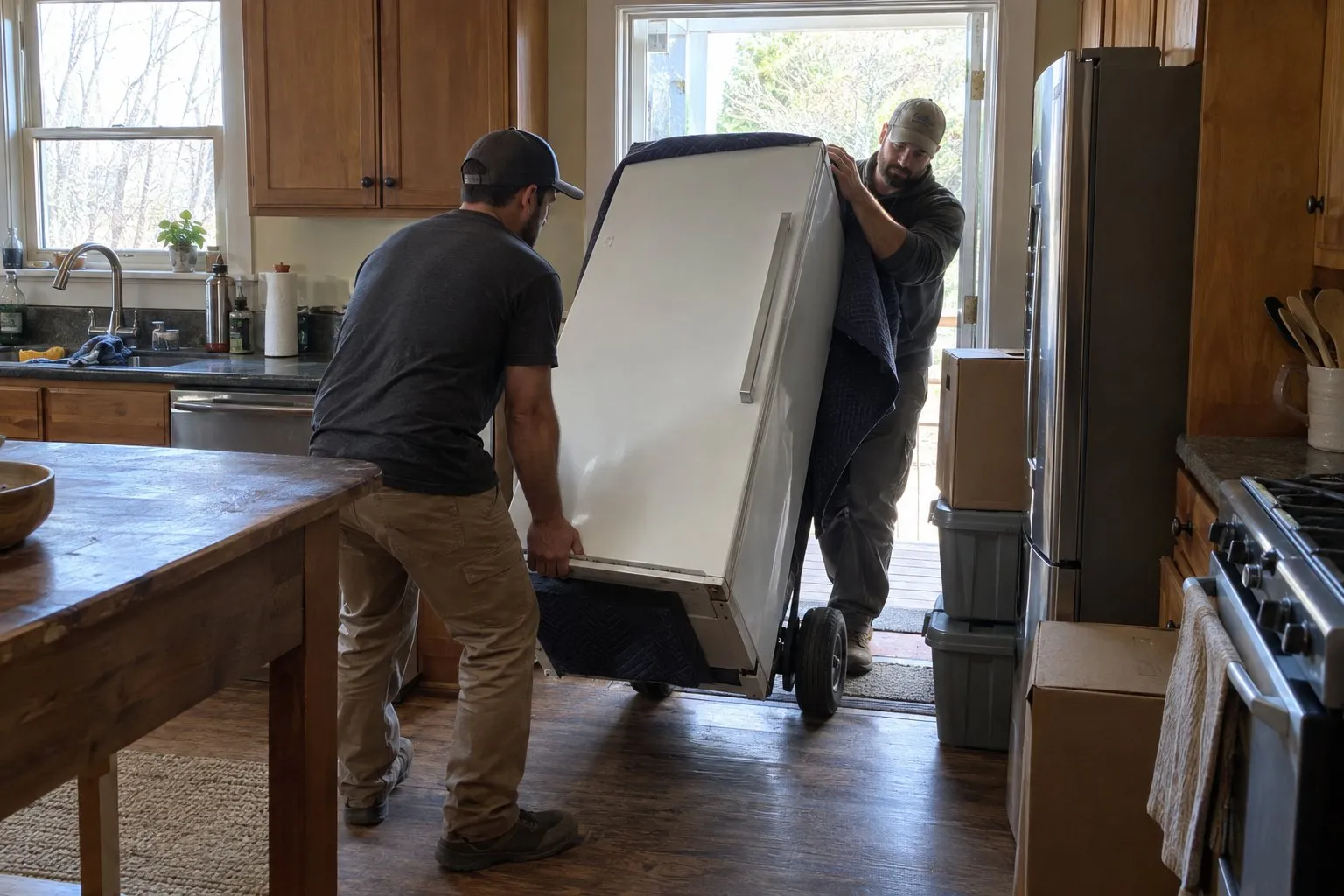
Empty the fridge and freezer at least a day before you start this process, since food needs to be eaten, given away, or coolered separately anyway. Prop both doors open once it is unplugged so air circulates. Towel out any pooled water in the bottom tray before the movers arrive, and leave the doors slightly ajar with a rolled towel until it is time to tape them shut for the move. If you want the full appliance-specific handling steps, including how to secure the compressor and prep it for the truck, see our refrigerator moving guide.
When Should You Disconnect the Washer and Dryer Relative to the Fridge?
Disconnect the washer after the fridge but before the dryer, ideally the evening before or first thing on moving morning. It needs a full drain cycle and a few hours to air out, but nowhere near the 24 to 48 hours a fridge needs. The dryer can wait until closer to load time since there is no water involved, only a vent and a power or gas line.
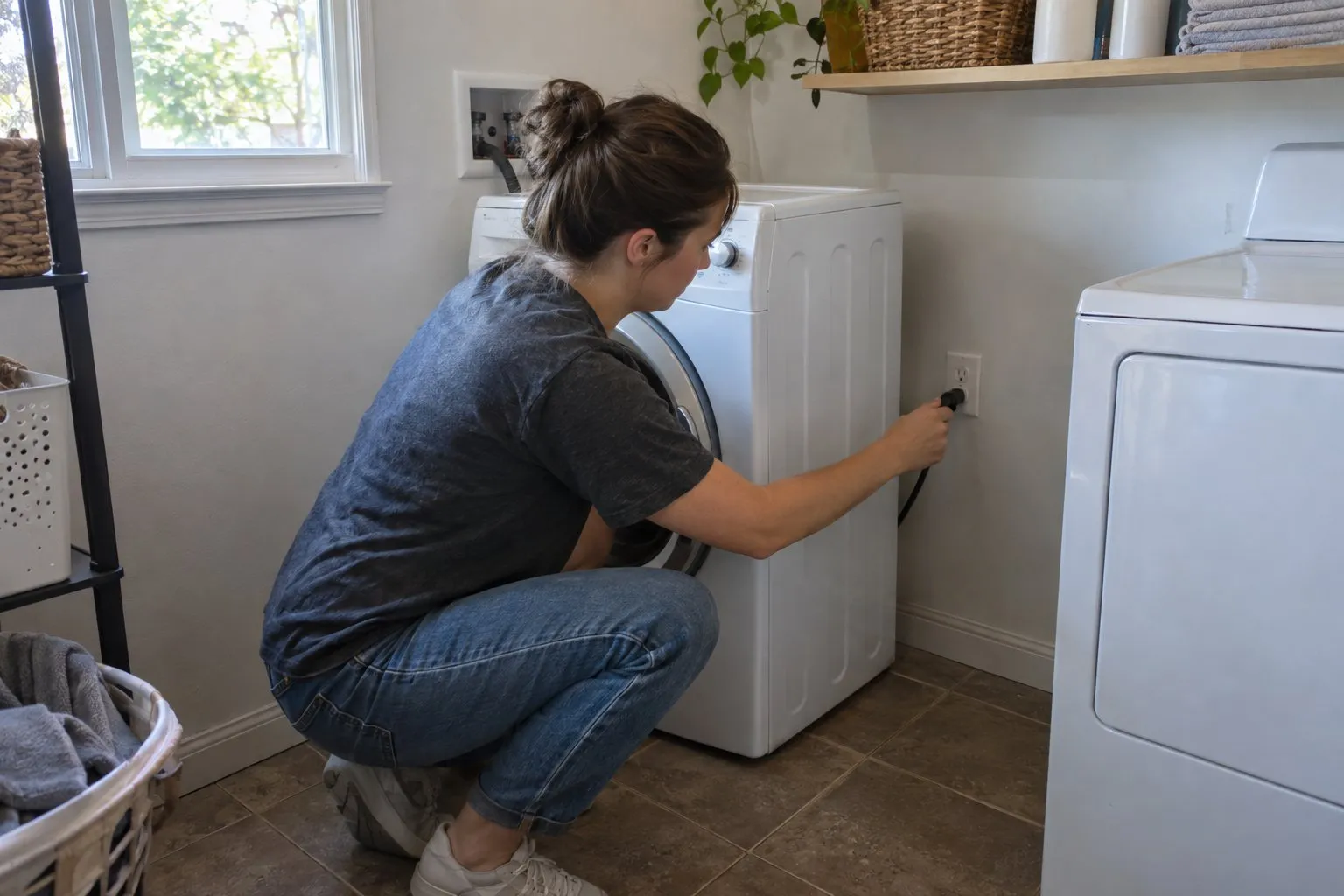
Run one final wash cycle empty (no detergent) the night before to clear out any residual water in the hoses. Shut off the water supply valves, disconnect both hoses at the wall, and let them drain into a towel or shallow pan for a few minutes since some water always remains trapped in the line. For the dryer, unplug it or shut off the gas line, then detach the vent hose from the wall duct. If either unit needs disassembly or careful handling for stairs and doorways, our washer and dryer moving guide covers the mechanics step by step.
What Happens If You Disconnect Appliances Too Early or Too Late?
Disconnecting too early means living without a working kitchen or laundry room for days you did not need to lose. Disconnecting too late means movers are waiting on you, or an appliance gets loaded still wet or half-frozen, which risks water damage to your belongings and mildew in the unit itself. The fix is matching each appliance's lead time to its actual drying needs instead of doing everything the morning of.
A refrigerator moved with ice still in it can leak steadily for hours once it is tilted or laid on its side in the truck, potentially damaging boxes stacked nearby. A washer moved with water still in the drum or hoses adds unnecessary weight and can slosh out during transport. A dryer is the most forgiving of the three: as long as the vent is capped and the drum is empty, there is little risk either way.
Should You Let Movers Handle the Appliance Disconnects?
Professional movers can handle disconnection for gas and electric appliances in many cases, but plumbing and gas line work sometimes falls outside what a moving crew is licensed or insured to touch. It is worth asking your moving company directly what they include, since policies vary by state and by company.
At minimum, most crews will unplug, secure cords, and physically move the units once they are already disconnected and dry. If your dryer is gas-powered, a licensed technician disconnecting the gas line ahead of time is the safer route rather than leaving it for moving morning. Building this into your overall local moving plan ahead of time, rather than figuring it out the day of, keeps the whole schedule from backing up.
Building Your Appliance Timeline Into Moving Day
Once you know the order (fridge, then washer, then dryer) the rest is just penciling it into your broader moving day schedule. Appliances are usually some of the last things loaded since they are heavy and need protection, so plan for them to be handled toward the end of the truck-loading process, not the beginning.
If your move includes a lot of other heavy or awkward items on the same day, coordinate the appliance timeline with whoever is managing the rest of the load so nothing sits half-prepped while other things get priority. A quick call to confirm arrival time the day before helps you calibrate exactly when to start the fridge defrost countdown.
Frequently Asked Questions
Can you move a refrigerator without defrosting it first?
You can, but it is not recommended. Ice and moisture left inside can leak during transport, soak nearby boxes, and lead to mildew if the fridge sits closed for several hours. Defrosting for at least 24 hours beforehand avoids all of this.
How long does a washer need to sit unplugged before moving?
A washer does not need a long unplugged period like a fridge does. Running a final empty cycle to clear the hoses, then disconnecting and draining for an hour or two, is usually enough before it is safe to load.
Is it okay to leave the dryer running until the movers arrive?
Yes, the dryer can generally run until shortly before the truck arrives since there is no water to manage. Just make sure it is fully cooled and the vent hose is detached before it gets loaded.
Do movers disconnect gas dryers and gas ranges?
Some moving companies will not disconnect gas lines due to licensing and liability, and require a licensed technician or plumber to handle it beforehand. Confirm this with your moving company ahead of time rather than assuming it is included.
What is the biggest mistake people make with appliance timing on moving day?
Trying to disconnect the refrigerator, washer, and dryer all on the same morning. The fridge in particular needs much more lead time to defrost than people expect, and rushing it is what causes leaks and delays.



Frequently Asked Questions
You can, but it is not recommended. Ice and moisture left inside can leak during transport, soak nearby boxes, and lead to mildew if the fridge sits closed for several hours. Defrosting for at least 24 hours beforehand avoids all of this.
A washer does not need a long unplugged period like a fridge does. Running a final empty cycle to clear the hoses, then disconnecting and draining for an hour or two, is usually enough before it is safe to load.
Yes, the dryer can generally run until shortly before the truck arrives since there is no water to manage. Just make sure it is fully cooled and the vent hose is detached before it gets loaded.
Some moving companies will not disconnect gas lines due to licensing and liability, and require a licensed technician or plumber to handle it beforehand. Confirm this with your moving company ahead of time rather than assuming it is included.
Trying to disconnect the refrigerator, washer, and dryer all on the same morning. The fridge in particular needs much more lead time to defrost than people expect, and rushing it is what causes leaks and delays.