
%20(1).webp)
How to Move a Fish Tank Without Losing Your Fish (or Your Water Chemistry)
Moving a fish tank safely means breaking the move into three separate problems: keeping your fish alive in transit, protecting the tank and its water chemistry, and reassembling everything correctly at your new home without shocking the ecosystem you have built. Most tank disasters happen because people treat an aquarium like furniture. It is closer to moving a living system than moving a piece of glass.
Whether you have a five gallon starter tank or a 75 gallon reef setup, the underlying rules are the same. Water is heavy and sloshes, glass seams can crack under uneven stress, and the beneficial bacteria that keep your fish alive do not survive being dumped down a drain. Here is how to get everyone, fish included, to the new house in one piece.
Why You Can't Just Drain and Refill a Fish Tank When You Move
Draining your tank completely and refilling it with fresh tap water at your new place will almost certainly trigger what is known as new tank syndrome, a spike in ammonia and nitrite that can kill fish within days. The bacteria colonies living in your filter media and substrate are what keep the water safe, and they need to survive the move too, not just the fish.
This is the single biggest mistake first-time movers make with an aquarium. They focus entirely on the fish and forget that the water itself is a biological environment, not just a container. Preserving as much of the original tank water and filter media as you can is what prevents a healthy tank from crashing the week after you move in.
How Do You Transport Fish During a Move?
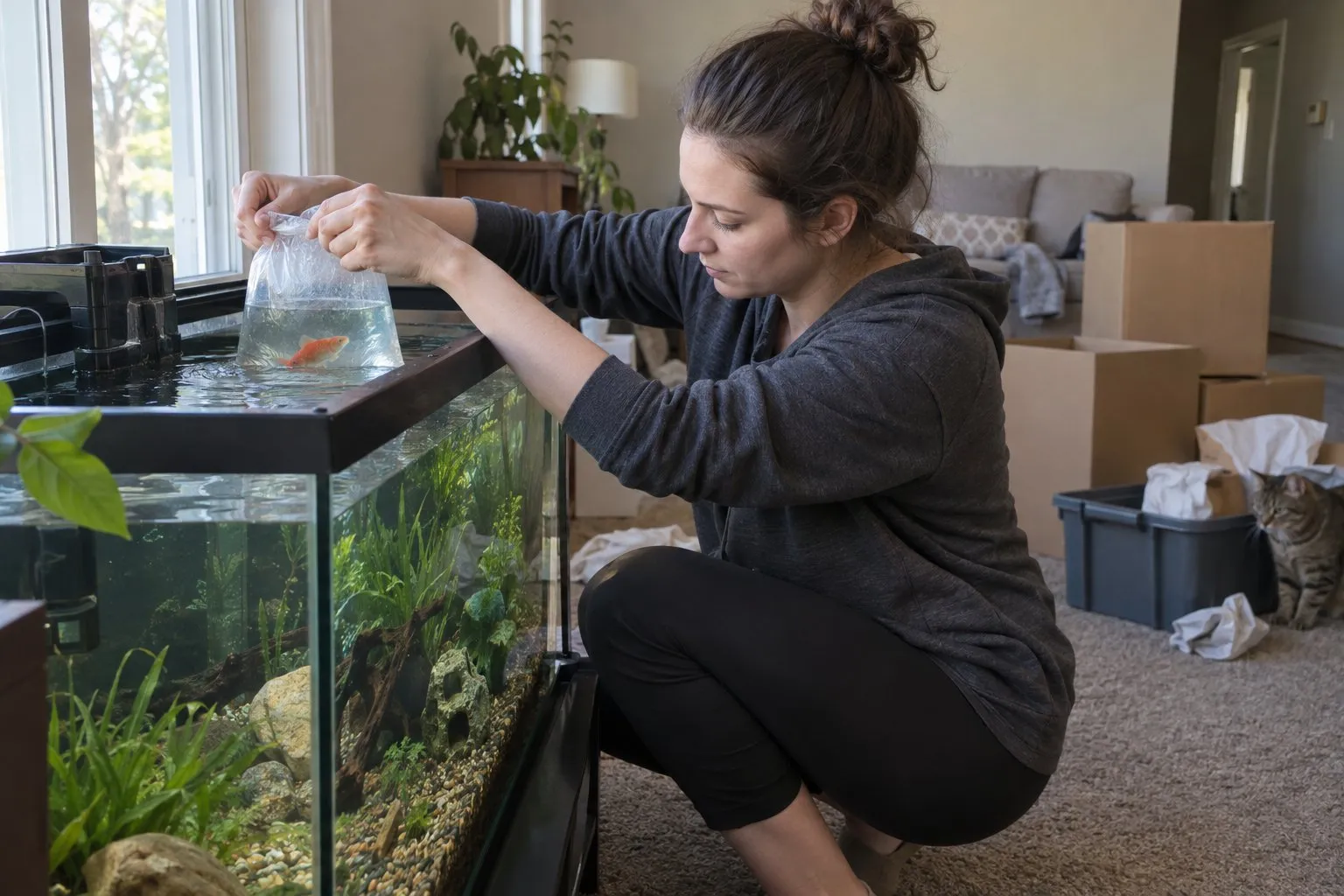
Fish travel best in individual, tightly sealed bags with about a third water and two thirds air, packed inside an insulated cooler to hold a stable temperature. For short local moves this can happen in the same trip as the rest of your belongings. For longer moves, treat the fish like a separate errand you personally control from start to finish.
- Bag them individually. Use clean fish bags (your local pet store will usually sell or even give you these), fill about one third with original tank water, and leave the rest as air space. Double-bag to guard against leaks.
- Keep bags upright and cushioned. Set bags in a box lined with towels or packing paper so they cannot tip or bang together, then place the box inside a cooler.
- Watch the temperature. Extreme heat or cold in a moving truck can kill fish faster than almost anything else. A cooler bag with a loose lid regulates temperature without sealing off oxygen.
- Never move fish in the moving truck. Trucks are not temperature controlled and fish should always travel in your own vehicle, where you can monitor them.
- Minimize total transit time. Most freshwater fish tolerate a few hours in a bag without issue. Beyond six to eight hours, plan for a water change en route or arrange to do the fish leg of the move as its own short trip.
How to Save Your Tank Water and Filter Media
Save five to seven gallons of your existing tank water in clean, sealed buckets and keep your filter media wet and bagged rather than rinsed or dried out. This preserved water and bacteria are what let you refill the tank at your destination without starting the nitrogen cycle over from zero.
Preserving the Water
Siphon water into food-grade buckets with tight lids before you drain the rest down for transport. Label them clearly so they do not get mistaken for cleaning supplies and dumped out by mistake. This saved water goes back into the tank first at the new house, topped off with treated tap water.
Protecting the Filter and Substrate
Unplug the filter but do not rinse it. Place sponges, cartridges, or bio-media into a sealed bag or container with some of the reserved tank water so the bacteria stay moist and alive. If you have an undergravel or sand substrate, scoop a portion into a sealed bag with water as well, since substrate also carries bacterial colonies worth preserving.
How to Pack the Tank, Decorations, and Equipment
Empty glass tanks are more fragile in transit than full ones, so they need rigid support underneath, foam or blanket padding on every side, and a "this side up" label so no one lays them flat on a seam. Decorations, heaters, and lighting each need their own wrapping to avoid scratches and cracked components.
- Never move a tank with water still in it. Even a few inches of water adds enough shifting weight to crack a seam or warp a stand during transport.
- Support the base fully. Wrap the tank in moving blankets and set it flat on a padded surface in your vehicle, never on its side or upside down.
- Wrap decorations and rocks separately. Driftwood, rocks, and ornaments can chip glass if they shift loosely inside an empty tank during the drive.
- Bag gravel or sand. Scoop remaining substrate into sealed bags or containers rather than leaving it loose in the tank.
- Protect the equipment. Heaters, filters, and air pumps should be dried where appropriate, wrapped, and boxed separately from anything breakable.
If your move involves other fragile or oddly shaped belongings alongside the tank, our guide on packing and moving furniture without scratches or damage covers the padding and wrapping techniques that also apply to stands, cabinets, and tank hoods.
Setting the Aquarium Back Up in Your New Home
Reassemble the tank in its final spot before adding any water, since a full aquarium is nearly impossible to move even a few feet. Refill with your reserved tank water first, top off with treated tap water, reinstall the filter media, and let the tank run for at least an hour before reintroducing fish.
Check your water parameters with a test kit before adding fish back in, especially ammonia and pH, since even a well-managed move can shift these slightly. Float sealed fish bags in the tank for about fifteen to twenty minutes so the water temperature can equalize gradually before releasing them. Keep an eye on the tank for the first week, since minor bacterial die-off during the move can sometimes cause a small ammonia bump even when everything was handled correctly.
When It Makes Sense to Get Professional Help
Large tanks, reef systems with live rock, or moves involving long drive times are usually worth handing off to specialists or at least coordinating closely with your moving company ahead of time. A standard moving crew can still help with the heavy lifting, the stand, and the surrounding furniture while you manage the biological side yourself.
If your move includes other awkward, heavy, or delicate items beyond the aquarium, it is worth thinking through your whole household at once rather than solving each item separately. Our guide to choosing the right help for oversized or specialty items walks through how to decide what you can handle yourself and what is worth hiring out. For the rest of your move, Moving Masters' local moving services can handle the tank stand, furniture, and boxes so you can focus entirely on the fish.
Ready to plan the rest of your move? Get a moving quote from Moving Masters and we will help you build a timeline that accounts for delicate items like your aquarium.
Frequently Asked Questions
Can I move a fish tank with water still in it?
No, you should never transport a tank with water inside, even a small amount. The shifting weight puts uneven stress on the glass seams and can crack the tank or damage the stand. Always drain the tank fully before moving it and refill at your destination.
How long can fish survive in a bag during a move?
Most healthy freshwater fish tolerate four to eight hours in a properly bagged and insulated setup without issue. For longer trips, plan a partial water change en route or treat transporting the fish as its own short, dedicated trip in your own vehicle.
Do I need to cycle a new tank again after moving?
You can usually avoid a full re-cycle if you preserve your original tank water and keep your filter media wet and intact during the move. Dumping all the water and starting with fresh tap water is what triggers new tank syndrome and forces the bacteria colony to rebuild from scratch.
Should movers handle my fish tank during a move?
A moving crew can safely handle the empty tank, stand, and surrounding furniture, but the fish themselves should travel with you in your own vehicle where you can monitor temperature and time in transit. Coordinate with your movers ahead of time so the tank is drained and prepped before they arrive.
What is the best way to keep fish warm during a cold weather move?
Keep bagged fish inside an insulated cooler and transport them in the climate-controlled cabin of your car rather than a moving truck. In very cold conditions, a reusable heat pack placed near, not touching, the bags can help maintain a stable temperature for the ride.
Frequently Asked Questions
No, you should never transport a tank with water inside, even a small amount. The shifting weight puts uneven stress on the glass seams and can crack the tank or damage the stand. Always drain the tank fully before moving it and refill at your destination.
Most healthy freshwater fish tolerate four to eight hours in a properly bagged and insulated setup without issue. For longer trips, plan a partial water change en route or treat transporting the fish as its own short, dedicated trip in your own vehicle.
You can usually avoid a full re-cycle if you preserve your original tank water and keep your filter media wet and intact during the move. Dumping all the water and starting with fresh tap water is what triggers new tank syndrome and forces the bacteria colony to rebuild from scratch.
A moving crew can safely handle the empty tank, stand, and surrounding furniture, but the fish themselves should travel with you in your own vehicle where you can monitor temperature and time in transit. Coordinate with your movers ahead of time so the tank is drained and prepped before they arrive.
Keep bagged fish inside an insulated cooler and transport them in the climate-controlled cabin of your car rather than a moving truck. In very cold conditions, a reusable heat pack placed near, not touching, the bags can help maintain a stable temperature for the ride.