
%20(1).webp)
How to Move a Refrigerator Without Ruining Your Floors
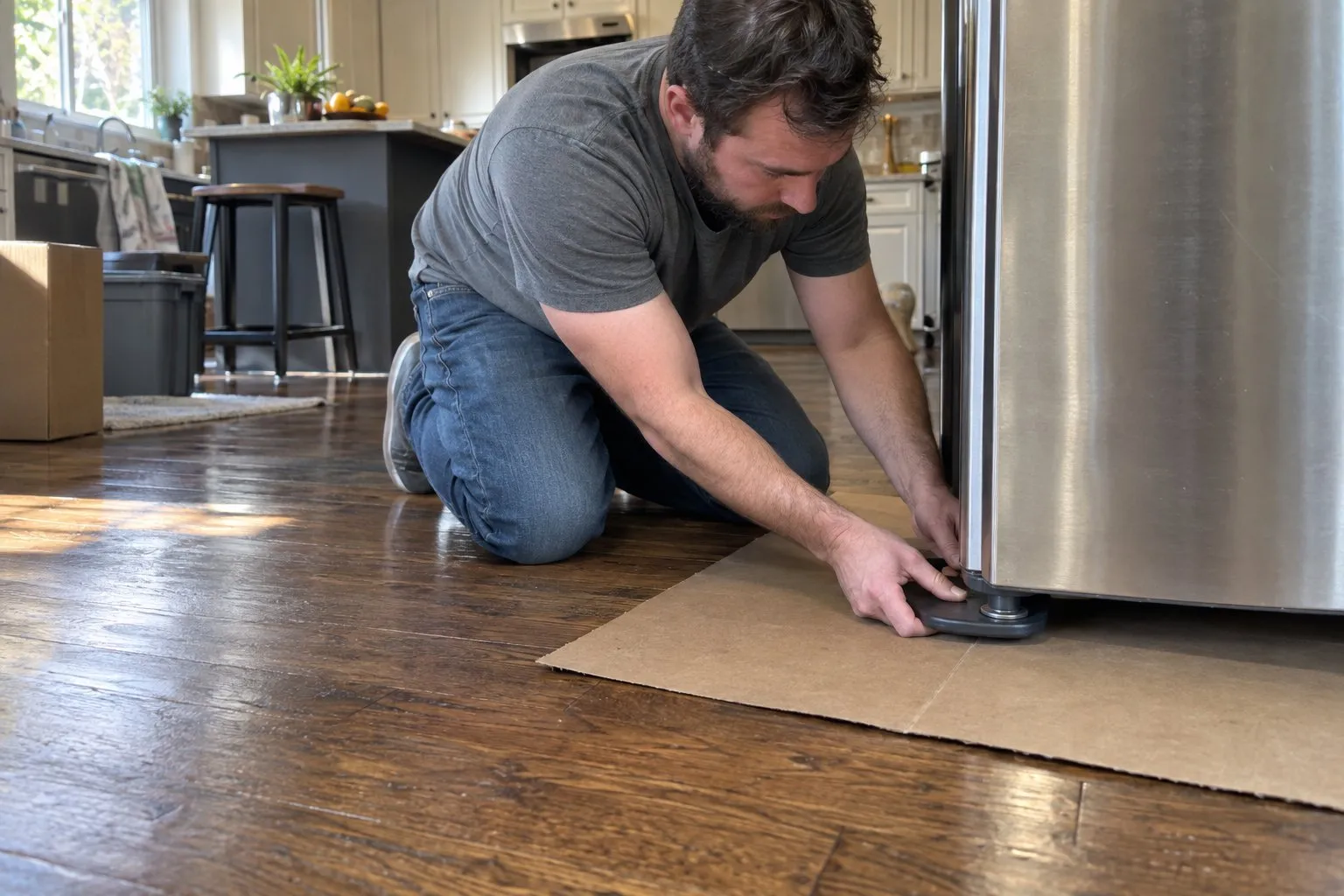
You move a refrigerator without scratching floors by getting the weight off the floor entirely with furniture sliders or an appliance dolly, never by dragging it and hoping for the best. Refrigerators are heavy enough to gouge hardwood, crack tile, or tear vinyl in a single push, and most of the damage happens in the first few feet, right as someone tips it back to get it rolling. The fix is less about strength and more about the right equipment and a slow, controlled path to the door.
If you are rearranging a kitchen, prepping a fridge for a move, or just tired of seeing drag marks across the linoleum, here is what actually protects your floors while the appliance gets where it needs to go.
Why Do Refrigerators Damage Floors So Easily?
Refrigerators damage floors because nearly all their weight sits on four small feet or casters, so every pound presses into a tiny contact patch. Add a shove instead of a lift, and that concentrated pressure turns into a gouge, a crack, or a long scuff mark.
Most standard fridges weigh between 200 and 400 pounds, and side-by-side or French door models can run heavier. Compare that to a dining chair spreading its weight over four thin legs. Now imagine that same chair loaded with 300 pounds and dragged sideways across your floor. Hardwood and laminate show scratches immediately because the finish is thin. Tile chips at the grout lines under sudden shifts in weight. Vinyl and linoleum tear or gouge because they are soft enough to catch on a rough foot pad or a metal caster.
The other issue is momentum. A fridge that is rocked side to side to "walk" it across a room builds up force with each shift, and that force has nowhere to go but into the floor.
What Is the Best Way to Move a Refrigerator Across Hardwood or Tile?
The best way is to lift the fridge just enough to slide furniture moving pads or hard plastic sliders under each corner, then push it in a straight, steady line rather than rocking it. This keeps the weight distributed and off direct contact with the floor.
Using Furniture Sliders
Felt-bottomed sliders work fine on tile and finished hardwood, but they are not ideal for carpet or uneven vinyl. For heavier fridges, rigid plastic sliders with a slightly domed top grip the appliance foot while gliding smoothly underneath. Tip the fridge back slightly (with a second person bracing it) and slot a slider under each front foot, then repeat at the back.
Using an Appliance Dolly Instead
An appliance dolly with a strap and stair-climbing wheels is the safer option for longer distances or when a floor transition (tile to hardwood, hallway to kitchen) is involved. Strap the fridge to the dolly at the widest point, keep it upright, and tilt back only enough to clear the floor, usually 10 to 15 degrees. Never move a refrigerator lying flat unless the manufacturer specifically allows it, since compressor oil can shift and cause problems later.
How Do You Protect Floors During the Actual Move?
You protect floors by laying a continuous path of rigid protection, like ram board, moving blankets, or plywood sheets, along the entire route before you start moving the fridge, not just at the starting point. Improvised protection that only covers part of the path leaves gaps where damage happens.
- Ram board or masonite: Interlocking rigid board that spreads weight and resists tearing, ideal for hardwood and tile.
- Moving blankets: Good secondary layer over ram board on tile to cushion against chips, but too soft to use alone under a rolling dolly.
- Old towels or cardboard: Acceptable in a pinch for a short, flat path, but they shift underfoot and are not a substitute for real protection on a multi-room route.
Tape protective boards down at the seams so they cannot slide apart mid-move. Walk the entire route first and check for thresholds, floor vents, or rugs that could catch a wheel and cause a sudden jolt.
Should You Empty and Prep the Fridge Before Moving It?
Yes. Remove all food, shelves, and drawers before moving a refrigerator, both to reduce weight and to stop loose glass shelves from shifting and cracking during transport. A fridge that shifts unexpectedly because of an unsecured shelf is far more likely to be handled roughly, which increases the odds of floor damage too.
Unplug the unit at least a few hours ahead of time, disconnect any water line for an ice maker, and let it come to room temperature to avoid condensation pooling on your floors mid-move. Tape the doors shut with painter's tape (never regular tape, which can pull finish off) so they cannot swing open and throw off your balance while you are guiding it across the room.
What Mistakes Make Floor Damage Worse?
The most common mistake is rocking the fridge side to side to "walk" it forward instead of lifting and sliding it. This looks easier in the moment but concentrates force into single points of contact repeatedly, which is exactly how gouges happen. A close second is skipping floor protection on "just a few feet" of exposed floor, since that is usually where the damage occurs.
Other frequent errors include moving the fridge alone (a second person to brace and steer makes a real difference in control), turning corners too sharply with a loaded dolly, and forgetting to check that sliders or dolly wheels are clean before rolling over finished floors. A single trapped pebble under a slider can scratch a path the entire length of a hallway.
Is It Worth Hiring Movers for a Refrigerator?
Hiring movers is worth it when you are relocating a fridge between rooms with tricky doorways, stairs, or long hardwood runs, since professional movers bring commercial-grade sliders, dollies, and floor protection already sized for the job. It also removes the injury risk of handling 300 or more pounds solo.
If the refrigerator is part of a larger household move, working with a full packing services team means the appliance gets wrapped, secured, and protected alongside everything else, instead of being the one item you try to handle differently. And if you are weighing whether to tackle heavy appliances yourself or bring in help for the whole move, a free moving quote from Moving Masters can tell you quickly what professional help would cost versus the risk of a cracked tile or a scratched hardwood floor.
Final Thoughts
Protecting your floors while moving a refrigerator comes down to three habits: get the weight off the floor with sliders or a dolly, lay continuous protection along the whole path, and move slowly in a straight line instead of rocking the appliance forward. Skip any one of those and you are gambling with a floor repair that costs far more than a set of moving sliders. If the fridge is one piece of a bigger relocation, pairing careful appliance handling with a broader plan for the rest of your refrigerator moving guide keeps the whole day running smoothly.
Frequently Asked Questions
Can you use towels instead of furniture sliders to move a refrigerator?
Towels can work for a short, flat stretch in an emergency, but they shift and bunch up under weight, which increases the risk of a sudden drop or scrape. Rigid plastic sliders or an appliance dolly are far more reliable for anything beyond a couple of feet.
Will furniture sliders work on textured tile floors?
Felt sliders can catch on textured or unglazed tile and are more likely to tear. On rough tile, rigid plastic sliders with a smooth, hard bottom or an appliance dolly with rubber wheels generally glide more predictably.
How long should a refrigerator sit unplugged before moving it to avoid floor damage from condensation?
Unplugging it two to three hours ahead lets internal components reach room temperature, which reduces condensation that can drip onto floors during the move. Wiping down the exterior and underside beforehand helps too.
Is it safe to move a refrigerator across floors by myself?
It is possible with the right equipment, but a second person to brace the appliance and watch the path makes tipping accidents and floor damage much less likely, especially at doorway thresholds and corners.
What is the difference between an appliance dolly and a hand truck for moving a fridge?
An appliance dolly has a wider base, a securing strap, and often stair-climbing wheels built for heavy, tall items like refrigerators. A standard hand truck is narrower and less stable, making it a poor substitute for a fridge-specific move.


Frequently Asked Questions
Towels can work for a short, flat stretch in an emergency, but they shift and bunch up under weight, which increases the risk of a sudden drop or scrape. Rigid plastic sliders or an appliance dolly are far more reliable for anything beyond a couple of feet.
Felt sliders can catch on textured or unglazed tile and are more likely to tear. On rough tile, rigid plastic sliders with a smooth, hard bottom or an appliance dolly with rubber wheels generally glide more predictably.
Unplugging it two to three hours ahead lets internal components reach room temperature, which reduces condensation that can drip onto floors during the move. Wiping down the exterior and underside beforehand helps too.
It is possible with the right equipment, but a second person to brace the appliance and watch the path makes tipping accidents and floor damage much less likely, especially at doorway thresholds and corners.
An appliance dolly has a wider base, a securing strap, and often stair-climbing wheels built for heavy, tall items like refrigerators. A standard hand truck is narrower and less stable, making it a poor substitute for a fridge-specific move.