
%20(1).webp)
How to Move a Mattress Without Ruining It (or Your Back)
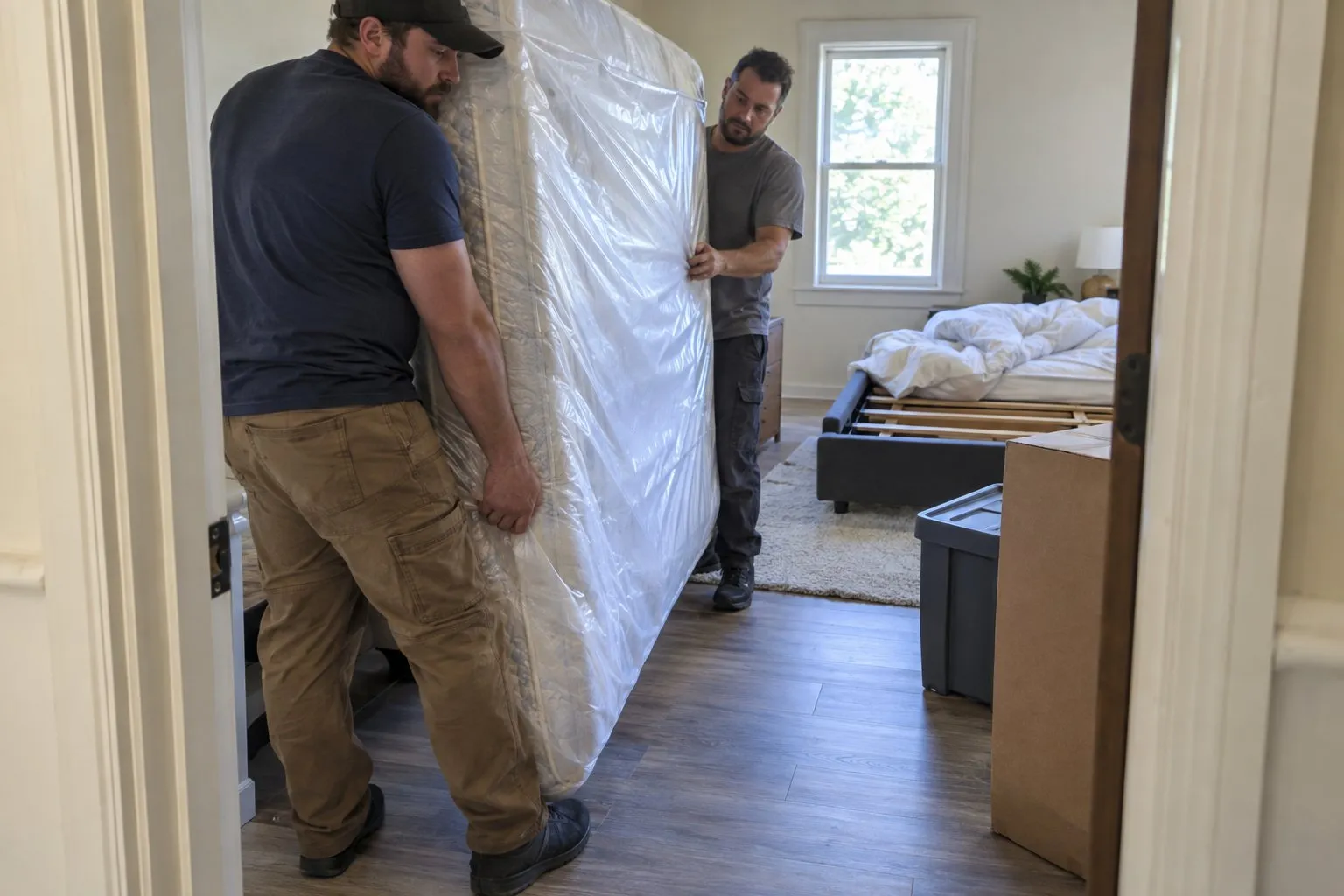
A mattress is one of the most awkward things you will ever carry out of a house. It is too big to grip properly, too floppy to stay square in a doorway, and expensive enough that tearing the fabric or soaking it in rain feels like a real loss. Moving a mattress without damaging it comes down to three things: wrapping it correctly, carrying it with the right technique, and loading it so it is not crushed under everything else in the truck.
This guide covers each of those steps in order, plus what to do differently for memory foam, and how to tell when a mattress has actually taken damage versus just needs time to reshape.
What Is the Best Way to Move a Mattress?
The best way to move a mattress is to bag it in a fitted plastic or woven mattress cover, carry it upright with a second person, and load it flat or on its side against a wall, never underneath heavy boxes or furniture. Skipping the bag is the single most common mistake, since an unprotected mattress picks up dirt, moisture, and tears on every doorframe and truck ramp it touches.
Mattress bags are sold at most hardware stores and moving supply retailers, and they come in sizes matched to twin, full, queen, king, and California king. Buy the bag before moving day, not the morning of, because guessing the size wrong means either a loose bag that slides off or one that will not seal.
Bagging the Mattress Correctly
Slide the mattress into the bag while it is still on the bed frame if you have the room to maneuver, since this gives you leverage and keeps the mattress from sagging while you work the plastic around it. Tape or tie off the open end so dust and rain cannot get in during transit. If you are using a heavy-duty woven cover instead of thin plastic, check that the seams are reinforced, since cheap plastic bags split at the corners under normal handling.
How Do You Carry a Mattress Without Bending It?
Carry a mattress upright on its long edge with one person at each end, walking in sync and communicating before every turn. A mattress carried flat between two people sags in the middle and can permanently weaken the internal springs or foam layers, especially on a queen or king size.
Before you lift, measure the doorframes, stairwells, and hallway turns the mattress needs to pass through. A queen mattress is roughly 60 inches wide, which is wider than most interior doors, so it usually needs to go through at a diagonal angle rather than straight on. Clear the path of rugs, lamps, and anything that could catch a corner.
Stairwells and Tight Turns
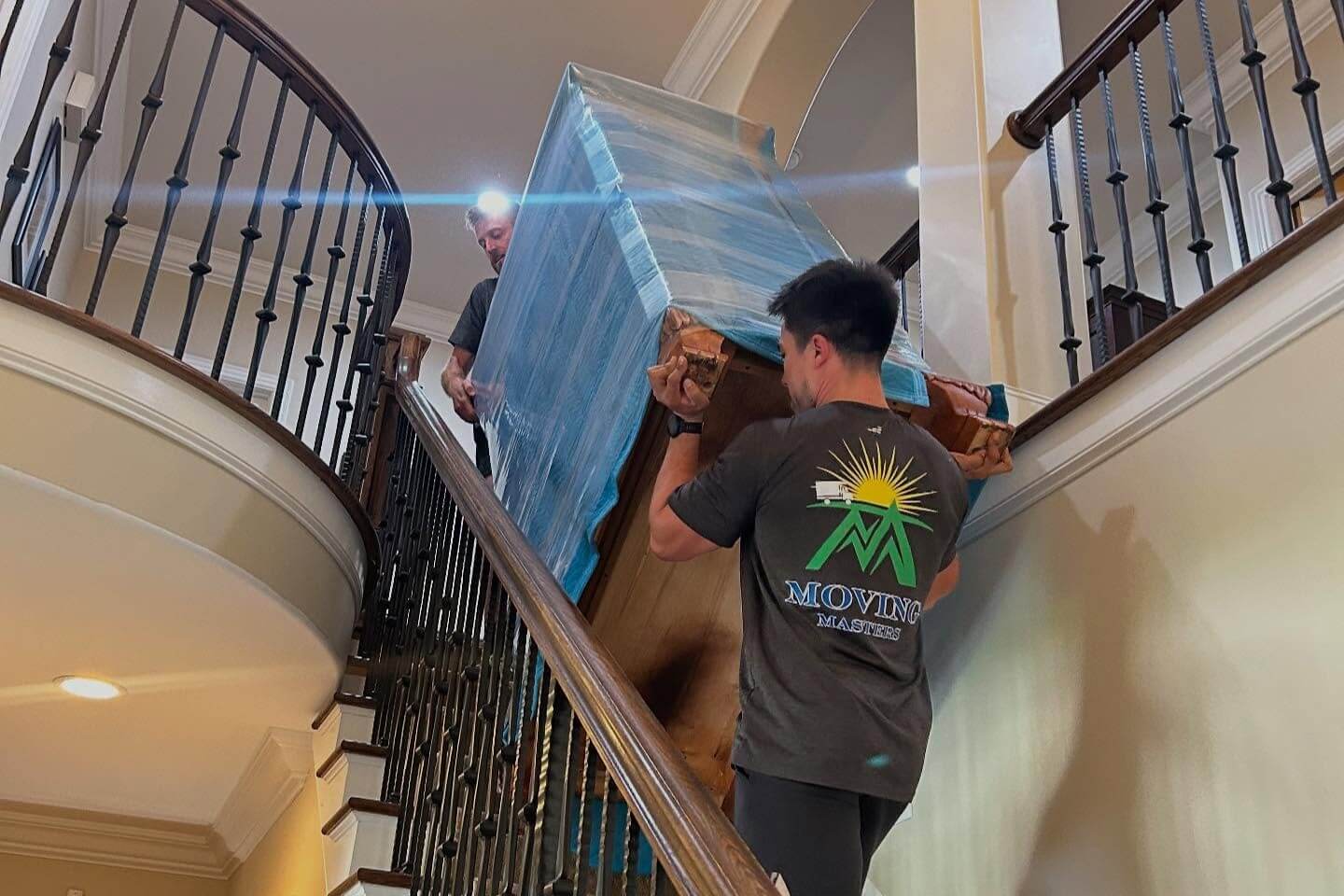
On stairs, the person below should support the bottom edge while the person above guides direction, and both should pause at landings rather than trying to power through a turn in one motion. If a mattress will not clear a stairwell turn no matter the angle, tilting it onto its side and walking it corner-first usually solves the problem. Rushing a tight turn is how mattresses get torn on stair railings or door hinges.
How Should a Mattress Be Loaded in a Moving Truck?
A mattress should be loaded flat on top of other items or upright against a flat truck wall, secured with straps so it cannot shift, slide, or take on weight from boxes stacked against it. Never lay heavy furniture or boxes directly on top of a mattress, since sustained pressure during a multi-hour drive can leave permanent indentations.
If you are loading upright, position it against the truck's side wall rather than the back door, where it is more exposed to bouncing and to being crushed if other items shift during the drive. Use moving straps or rope to cinch it to the wall, and pad any metal edges it touches with a moving blanket so vibration does not wear through the bag.
If your move includes several oversized pieces, a mattress is rarely the only thing competing for space and stability in the truck. Planning the load order in advance, and getting help from a crew that packs trucks for a living through local moving services, avoids the scramble of figuring out truck geometry on moving day itself.
Do Memory Foam Mattresses Need Different Handling?
Yes. Memory foam mattresses should never be folded, rolled, or bent sharply, even though the material looks flexible, because folding can crease the foam permanently and create a soft spot that never fully recovers. Treat a memory foam mattress with the same rigid, flat-or-upright handling as an innerspring model.
Memory foam is also more sensitive to temperature. Extreme heat inside a parked truck can soften the foam temporarily, making it more prone to denting under pressure, so avoid leaving a loaded truck sitting in direct sun for hours before departure if you can help it.
Signs Your Mattress Was Damaged in the Move
A mattress that has taken real damage usually shows a torn cover, a visible dent that does not spring back within a day, or a new lump or sagging area that was not there before the move. Minor surface wrinkling in the fabric or a temporary compression line from straps is normal and typically works itself out within 24 to 48 hours once the mattress is unwrapped and allowed to breathe.
If you do find lasting damage, check whether your move was covered under a valuation option, since standard carrier liability is often minimal. Our guide on moving insurance and valuation coverage walks through what is typically covered and what is not.
When It Makes Sense to Let Professionals Handle It
Professional movers make sense for a mattress move when you are dealing with a king or California king size, a multi-story home with tight stairwells, or a mattress paired with a heavy bed frame that needs disassembly. The combination of awkward size and the risk of back injury from carrying it solo is exactly the kind of job crews handle daily.
If your mattress is just one piece of a larger household move, it rarely makes sense to rent a truck for it alone. Pair it with your broader plan and get a sense of cost and timing early. You can get a free quote from Moving Masters to see what professional handling would cost for your specific mattress size and home layout.
Frequently Asked Questions
Can you fold a mattress to move it through a narrow door?
You can gently curve a standard innerspring mattress to angle it through a narrow doorway, but you should never fold it sharply or bend memory foam. If a doorway is too narrow even at an angle, remove the door or its hinges rather than forcing the mattress to bend.
How long can a mattress stay bent or rolled during a move?
A mattress should not stay bent, rolled, or folded for more than a few minutes while maneuvering through a tight space. Leaving it bent for hours, such as strapped to a roof rack in a curved position, can cause permanent damage to the springs or foam.
Is it safe to stand a mattress up for an extended period during a move?
Standing a mattress upright for transport or temporary storage is generally safe for a few days, but for longer storage periods it is better to lay it flat to avoid uneven settling of the internal materials over time.
Do I need a special mattress bag or will plastic sheeting work?
A fitted mattress bag sized to your mattress works better than loose plastic sheeting because it stays sealed during handling and will not slide off or catch on doorframes. Loose sheeting often tears or comes loose exactly when you need protection most.
Can two people move a queen or king mattress by themselves?
Two people can usually move a queen mattress through a home without much trouble, but a king or California king is heavier and more unwieldy, and having a third person to guide corners and stairs significantly reduces the risk of dropping it or injuring your back.


Frequently Asked Questions
You can gently curve a standard innerspring mattress to angle it through a narrow doorway, but you should never fold it sharply or bend memory foam. If a doorway is too narrow even at an angle, remove the door or its hinges rather than forcing the mattress to bend.
A mattress should not stay bent, rolled, or folded for more than a few minutes while maneuvering through a tight space. Leaving it bent for hours, such as strapped to a roof rack in a curved position, can cause permanent damage to the springs or foam.
Standing a mattress upright for transport or temporary storage is generally safe for a few days, but for longer storage periods it is better to lay it flat to avoid uneven settling of the internal materials over time.
A fitted mattress bag sized to your mattress works better than loose plastic sheeting because it stays sealed during handling and will not slide off or catch on doorframes. Loose sheeting often tears or comes loose exactly when you need protection most.
Two people can usually move a queen mattress through a home without much trouble, but a king or California king is heavier and more unwieldy, and having a third person to guide corners and stairs significantly reduces the risk of dropping it or injuring your back.